
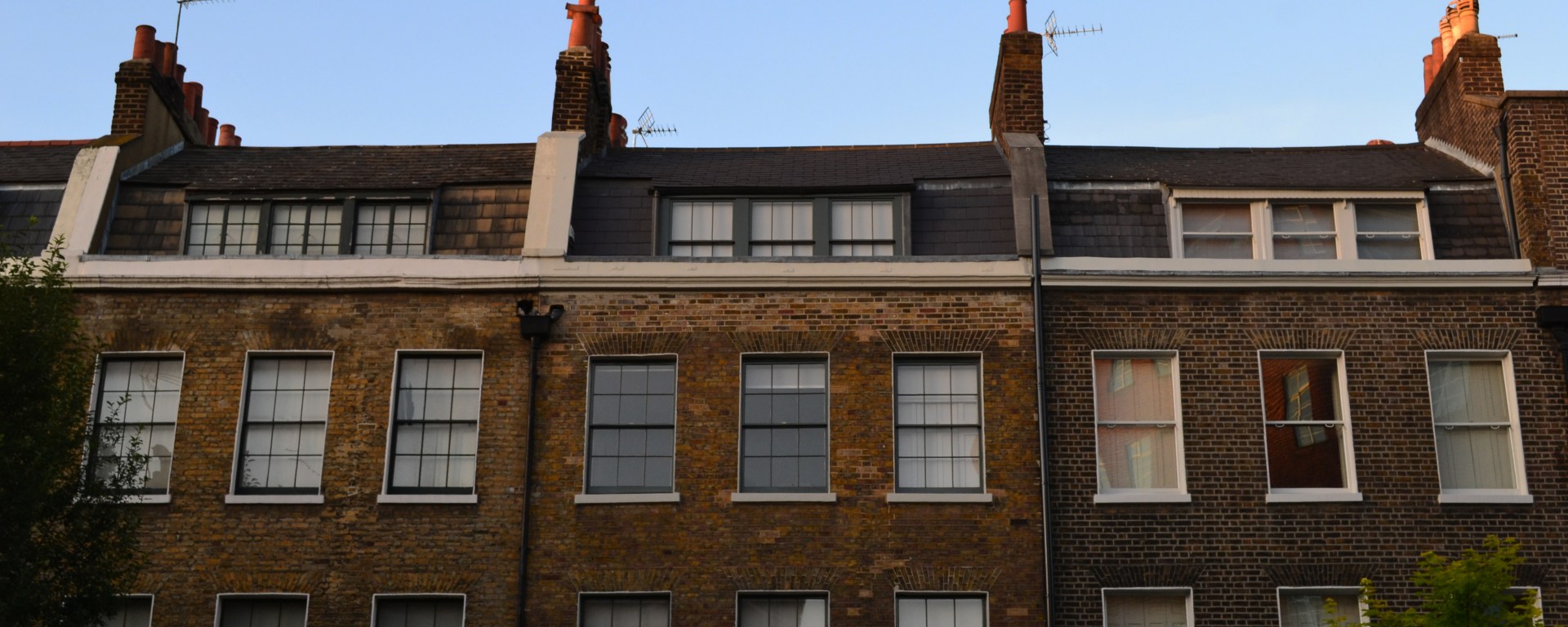
The latest statistics regarding Camden’s housing delivery show a significant shortfall against their mandated requirement in the Local Plan. Until this shortfall is rectified, Camden planners have reduced powers to refuse major development proposals.
This is an interesting and potentially quite significant issue which seems to have flown under the radar. These statistics are not new, dating back to December of 2024, but the lack of any general announcement or news articles is quite surprising. It therefore warrants an article and some general commentary as to how this might affect planning and conservation in the coming years.
Camden’s emphasis on housing delivery and particularly affordable housing delivery, along with the high development pressures in the area, mean one would expect housing delivery to exceed or be broadly in line with their requirements. But these statistics show quite a significant shortfall at just 53% since 2018/19.
Where housing delivery falls below 75% of requirement, local authorities have weakened powers to refuse new development proposals. In technical terms, the ‘presumption in favour of sustainable development’ applies (paragraph 11 of the NPPF), which means that applications should be granted unless:
- ‘the application of policies in the NPPF that protect areas or assets of particular importance provides a strong reason for refusing the development proposed; or
- any adverse impacts of doing so would significantly and demonstrably outweigh the benefits, when assessed against the policies in this NPPF taken as a whole, having particular regard to key policies for directing development to sustainable locations, making effective use of land, securing well-designed places and providing affordable homes, individually or in combination.’
Camden’s Local Plan policies and associated guidance are still to be afforded weight, with applications still to be assessed against these. However, the ’tilted balance’ invoked by the NPPF means that where development may have previously been refused in Camden, there is now a stronger presumption in favour of approving such applications.
It is unlikely that the ’tilted balance’ will be invoked or even be known about by the majority of small-scale applicants in the borough, but it will certainly be something on the radar of major developers, whose proposals always have a costly and lengthy appeal process as a backup in the event of a refusal. In short, it is now even easier for major developers to receive permission for their schemes.
The usual statutory tests relating to conservation areas and listed buildings still apply in full (at least on paper), as these are established in law rather than local policy, and this law along with supporting case law is also included in the NPPF. Nevertheless, the general presumption in favour of approval still applies unless adverse impacts on heritage and conservation significantly outweigh the benefits of any scheme. Schemes proposing large amounts of housing, in particular, are likely to be given significant weight.
Housing Shortfall in London
Shortfall in housing delivery is not peculiar to Camden but is more widely evident across London in recent years. In response the GLA has published ’emergency measures’ to stimulate housebuilding, reducing or revoking a number of existing standards. Of note are standards relating to affordable housing, in many cases reducing the minimum from 35% to 20%. This effectively becomes the new affordable housing requirement in most cases, significantly below Camden’s ‘out-of-date’ figure of 50%. Crucially, developers need not even demonstrate that higher levels of affordable housing could be delivered on the site, improving profitability above the usual 15% baseline.
What is particularly egregious about this situation is that it is being used by developers not only for new consents, but also for existing consents, where design standards or affordable housing requirements can potentially be revised downwards to accord with the GLA’s new measures. This is the case, for example, at the controversial O2 development on Finchley Road, where according to the CNJ Landsec are seeking to reduce affordable housing provision down to 20% from the previously approved 35% (already below Camden’s 50% requirement).
Delivery of affordable housing is seen as one of Camden’s key strategic aims, and is one of the benefits which is cited as a justification for allowing harm to residential amenity and historic areas through tall buildings. The fact that this delivery is to be undermined, potentially even for existing consents in Bloomsbury and Covent Garden, means the long-term harm caused by these developments could deliver even less tangible benefit to local communities. Presumably, also, payments-in-lieu for new developments will decrease in proportion to the reduction in affordable housing requirement, reducing Camden’s section 106 income and the ability for them to build their own affordable housing schemes.
Tall Buildings
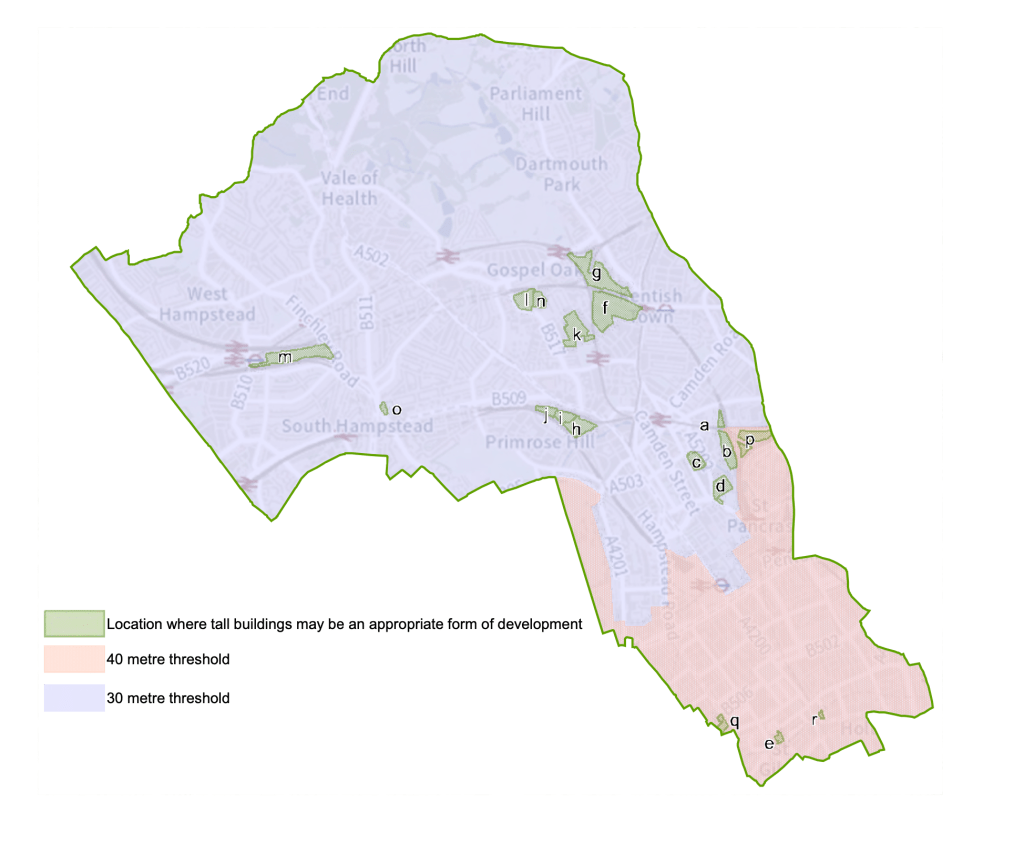
Camden’s failure to meet housing targets requires them to take action to make up this shortfall in delivery. One of the ways this is likely to be achieved is through Camden’s draft new Local Plan (currently under examination at the inspectorate), which, in particular, earmarks several sites for new tall buildings (Policy D2(A) and Appendix 2).
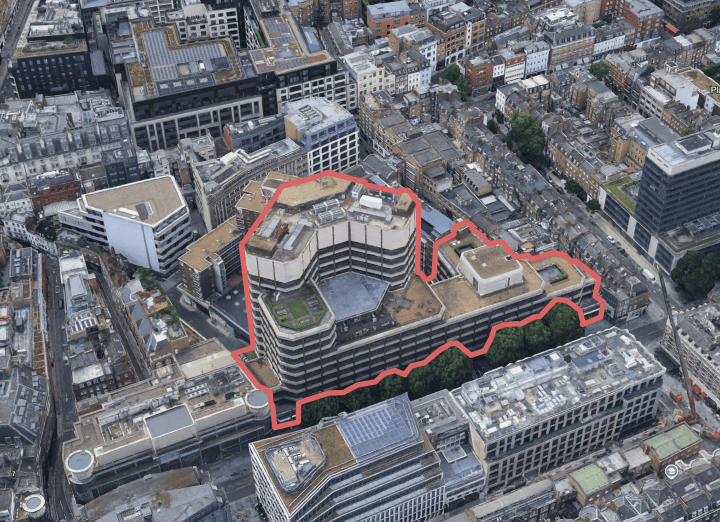
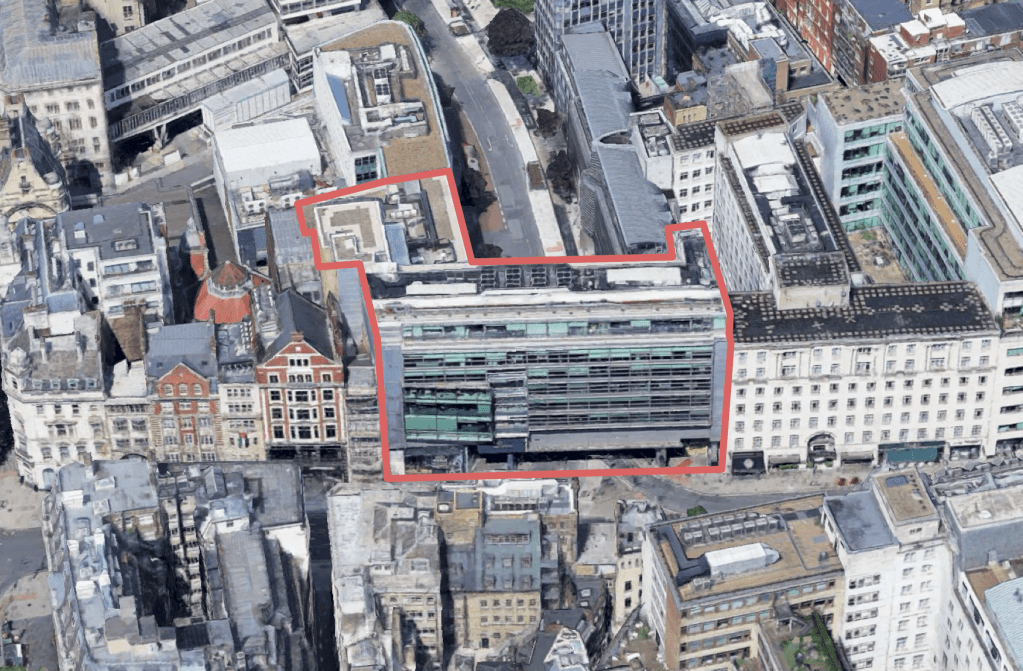
Two of these sites (excluding Selkirk House) fall within Camden’s central areas, at Central Cross on Tottenham Court Road and 110 High Holborn (images below). While there are no hints in the Local Plan about what might be built here in terms of size, design, or use, it is quite likely that we will hear about some major proposals on these sites within the next few years. Camden define a tall building in this area as ‘over 40m in height’. This is roughly equivalent to the height of Belgrove House. So any new ‘tall buildings’ would presumably be significantly taller than this. Indeed, it is surprising that Belgrove House is ‘only just’ considered a tall building under the new rules.
Along with these sites earmarked for tall buildings, there are three further sites ‘allocated’ for (presumably) quite major development in the central areas. These include:
- The former Thameslink Station on Pentonville Road
- An large site on the corner of Pakenham Street / Wren Street
- Holborn Library and Cockpit Yard to the rear.
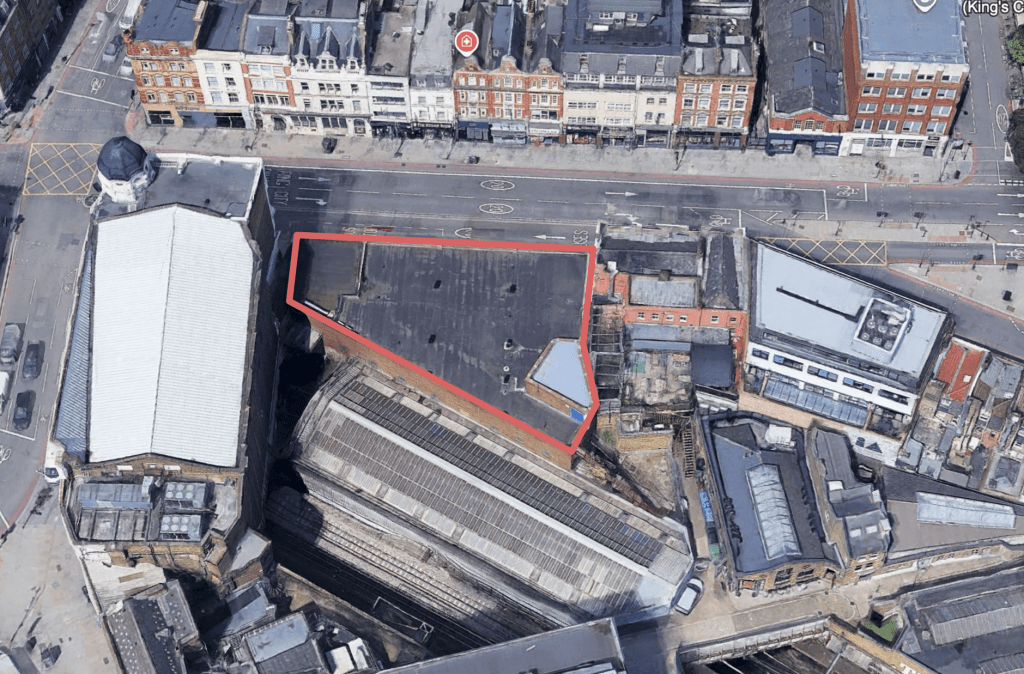
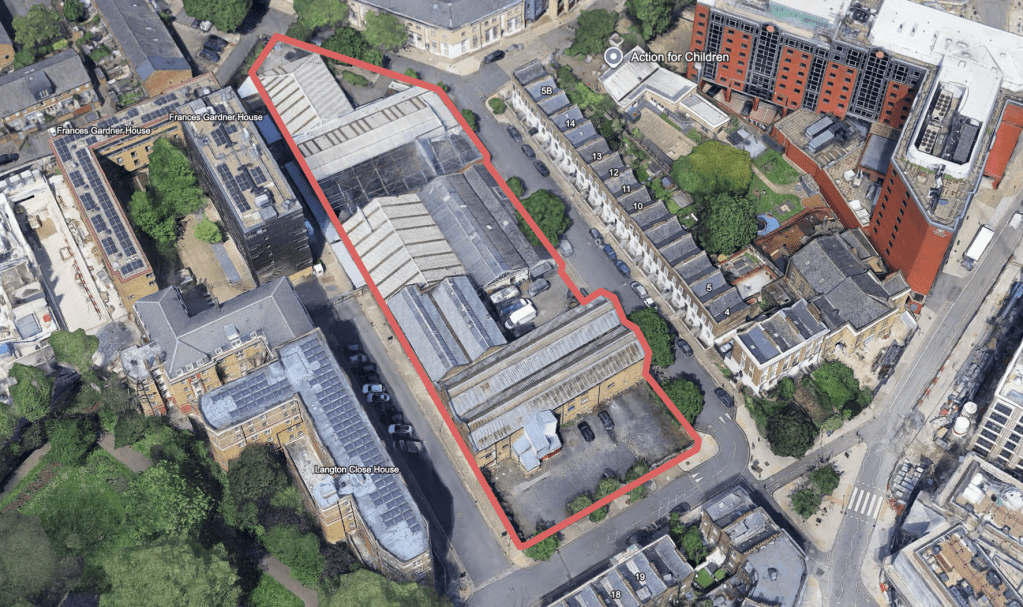
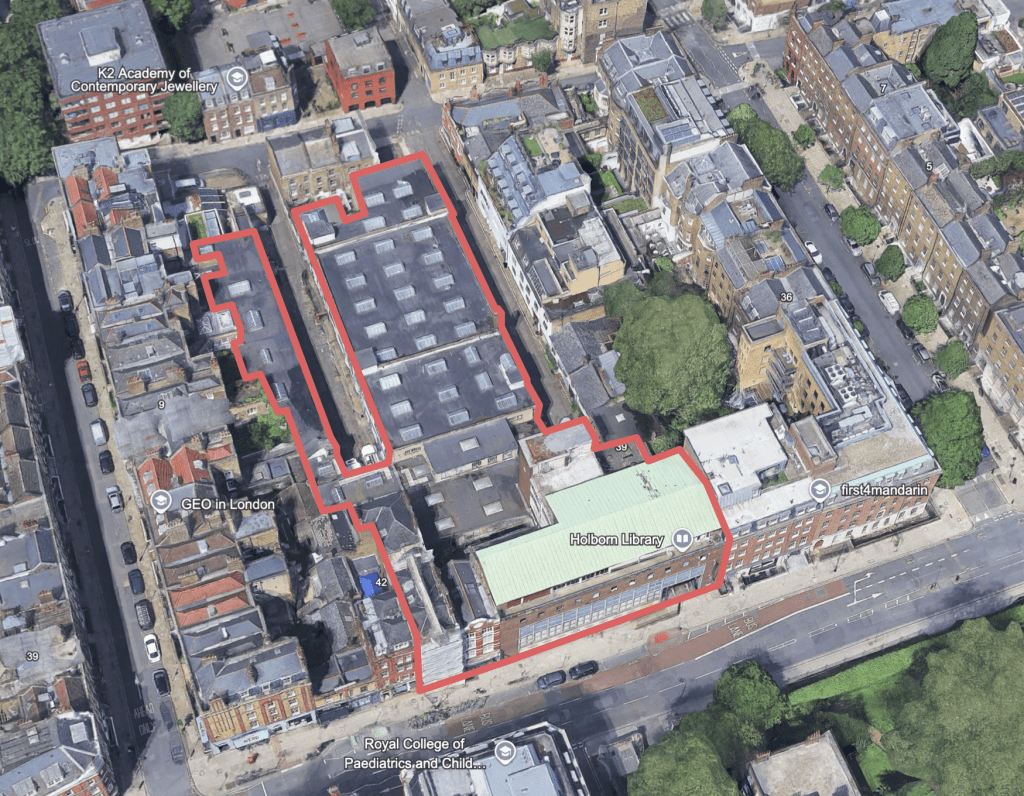
Camden have set out in their draft Local Plan what they want these three sites to be used for, and the amount of housing to be delivered. However the plan is still to be examined at the inspectorate where it will likely be modified, and, due to their shortfall in housing delivery, Camden will inevitably have less control over what developers wish to do on these sites.
Concluding Remarks
It would be nice if there were some positives that can be drawn from the above discussions but I’m afraid there just aren’t. To date, major developments have been a prime cause of harm to historic areas and residential amenity, and, rather than being properly controlled, it looks as though such schemes will have an even easier time through planning than before. It is perhaps inevitable that the central conservation areas and especially Bloomsbury will become increasingly peppered with quite major, insensitive buildings. Given Camden’s quite severe shortfall in housing delivery, it seems it will take some time before they regain their full planning powers (not that, in most cases, this was at all helpful).
As a disclaimer, this is a very complicated area of policy/law and I’ve probably made several technical errors in my explanation. As long as you’re not a very senior planner or inspector, however, it should make enough sense.
Note 13/03/2026. The original article contained an incorrect image of Central Cross.
 Save Bloomsbury
So is it all about the money that these developments might generate for Camden? The thought of having some high-rise bully overwhelming small Listed historic homes (like in Pakenham Street WC1) for a tiny percentage of social housing and probably a derisory amount of money for Camden, would be unforgivable for the Bloomsbury Conservation Area.
LikeLike